Publisher ID:
1187
Our code:
MC-HR-POC-2019-03-21-3/1
Country:
Publisher:
Croatian Post
Design:
Dean RoksandićMario RomulićDražen Stojčić
Printing:
AKD d.o.o.
Stamp value:
3,10 HRK
Date of stamp issue:
Cancelled:
Theme:
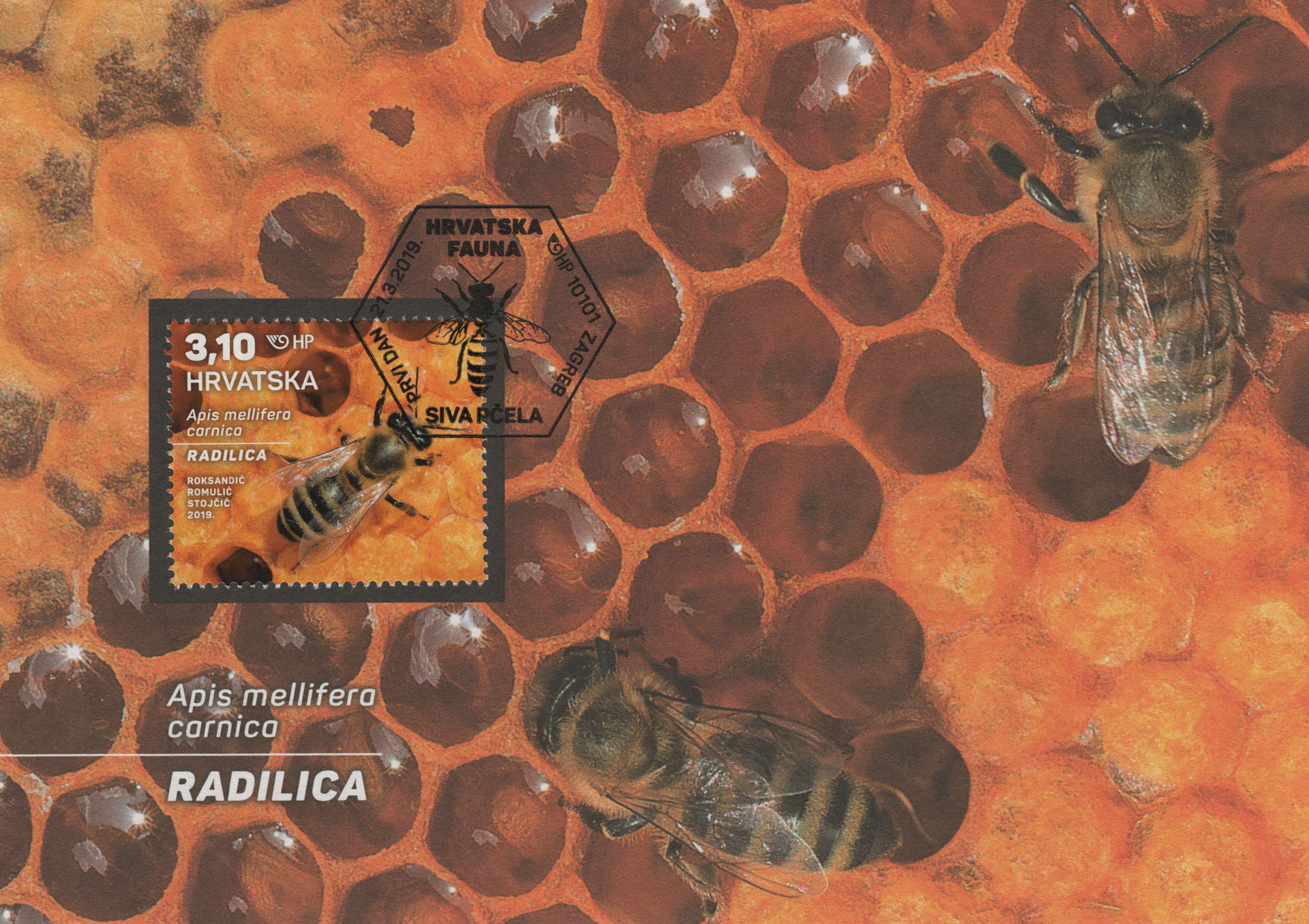
Fauna of Croatia - Bee
In the member's collection
A worker bee is a female bee that lacks the reproductive capacity of the colony’s queen bee and carries out the majority of tasks needed for the functioning of the hive. Worker bees are present in all eusocial bee species, but the term is rarely used (outside of scientific literature) for bees other than honey bees, particularly the European honey bee (Apis mellifera). Worker bees of this variety are responsible for approximately 80% of the world’s crop pollination services. They gather pollen in the pollen baskets on their back legs and carry it back to the hive where it is used as food for the developing brood. Pollen carried on their bodies may be transferred to another flower, where a small portion can rub off on the pistil, resulting in cross-pollination. Nectar is sucked up through the proboscis, mixed with enzymes in the stomach, and carried back to the hive, where it is stored in wax cells and evaporated into honey. The life span of a worker bee is generally one month, although worker bees have been recorded to live for up to 2 months if born in the summer and up to 6-8 months when born in autumn or winter. The lifespan of summer worker bees can increase to 6 months if placed in a colony that lacks a queen.