Publisher ID:
896
Our code:
MC-HR-POC-2013-04-08-3/2
Country:
Publisher:
Croatian Post
Design:
Tomislav Tomić
Printing:
Zrinski d.d.
Stamp value:
3,10 HRK
Date of stamp issue:
Cancelled:
Theme:
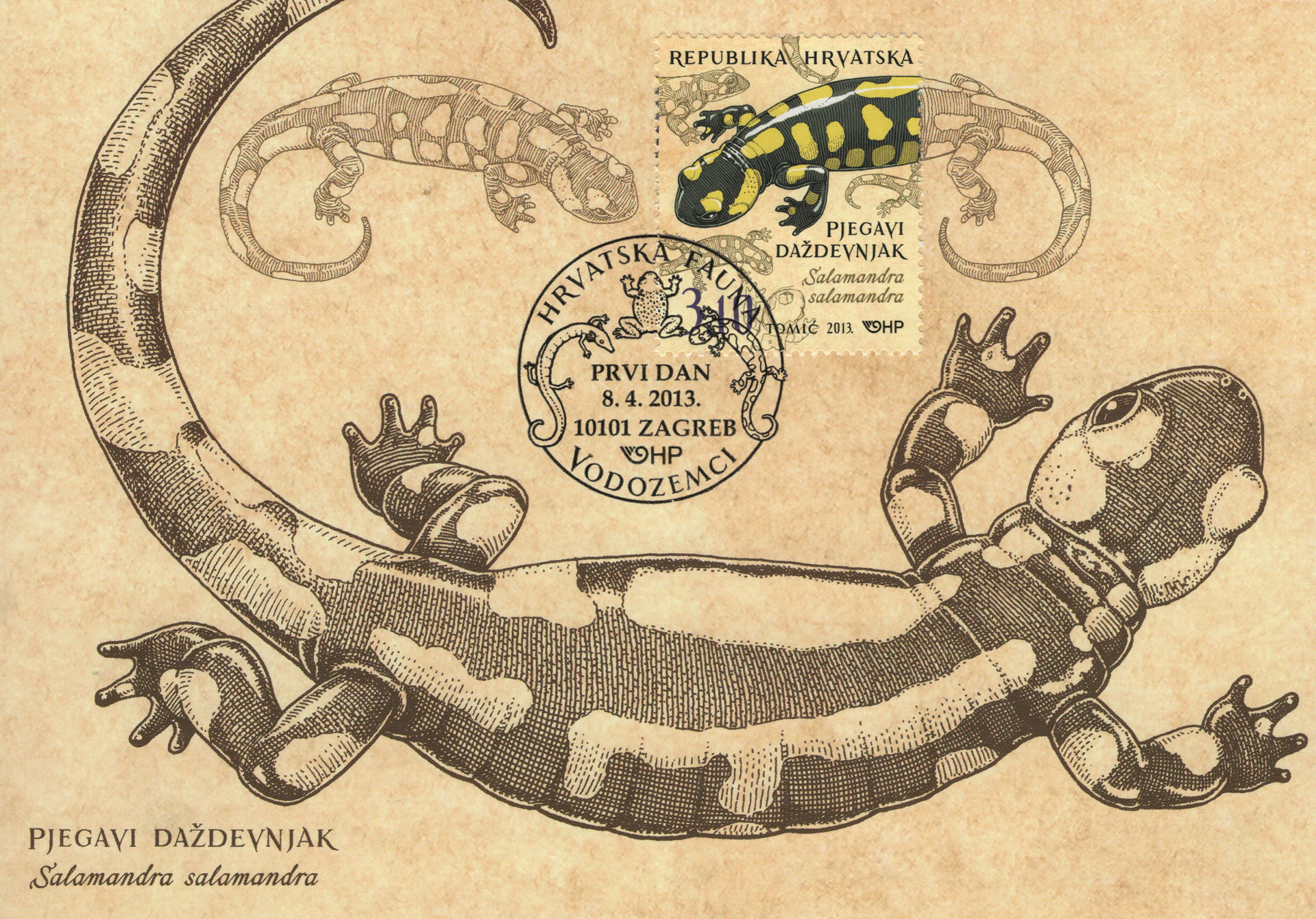
Fauna of Croatia - Amphibians
In the member's collection
Salamandra salamandra, also known as the fire salamander, is a species of salamander found in Europe. It is the largest species in the family Salamandridae, ranging from 15 to 25cm long, with some individuals exceeding 30cm. Its body is black with yellow or orange markings that occur in patterns varying from discrete spots to large splotches or bands. The bright coloration of the fire salamander is highly conspicuous and acts to deter predators by honest signalling of its toxicity (aposematism). Fire salamanders can have a very long lifespan; one specimen lived for more than 50 years in Museum Koenig, a German natural history museum.
Fire salamanders live in the forests of central Europe and are more common in hilly areas. They prefer deciduous forests since they like to hide in fallen leaves and around mossy tree trunks. They need small brooks or ponds with clean water in their habitat for the development of the larvae. Whether on land or in water, fire salamanders are inconspicuous. They spend much of their time hidden under wood or other objects. They are active in the evening and the night, but on rainy days they are active in the daytime as well. The diet of the fire salamander consists of various insects, spiders, millipedes, centipedes, earthworms and slugs, but they also occasionally eat newts and young frogs. In captivity, they eat crickets, mealworms, waxworms and silkworm larvae. Small prey will be caught within the range of the vomerine teeth or by the posterior half of the tongue, to which the prey adheres.